How to Choose the Right Journal for Daily Writing
Why a Dedicated Journal Matters
I have kept a journal for daily writing for over twenty years, and I have learned that the notebook itself matters more than most people think. The feel of the paper under your fingers, the way the ink sits on the page, the size and weight of the book you carry with you - these small things either invite you to write or push you away. A journal for daily writing is not just a blank book. It is a tool that shapes the habit itself.
When I started, I grabbed whatever notebook was cheapest. I filled pages in spiral-bound school notebooks, in cheap composition books with thin paper that bled through to the next page. I wrote in them, yes, but I did not look forward to opening them. The paper was rough, the binding broke, and the whole experience felt like a chore. It took me years to understand that the notebook could be part of the pleasure of writing, not just a container for words.
Now I test notebooks the way a carpenter tests a hammer. I pay attention to weight, balance, paper quality, and whether the binding lies flat when open. I have tried most of the well-known brands - Leuchtturm1917, Moleskine, Rhodia, Field Notes, Hobonichi Techo, Midori MD Notebook, and Baron Fig - and I have strong opinions about each. But the best journal for any given person depends on how they write, where they write, and what they want from the practice.
Paper Quality Changes Everything
The first thing I look for in a journal for daily writing is paper that can handle the pen I use. If you write with a ballpoint or a standard gel pen, almost any paper will work. But if you use a fountain pen or a Pigma Micron, the paper becomes the most important feature. Thin paper bleeds. It feathers. It ghosts through to the other side, making the back of the page nearly unreadable.
This is where Tomoe River Paper stands apart. It is thin - almost translucent - but it holds ink beautifully. The Hobonichi Techo uses Tomoe River Paper, and that is one reason it has a devoted following among daily writers. The paper is light enough to carry 365 pages in a small book, yet fountain pen ink sits on top of it without bleeding. I have used a Hobonichi for two years straight, and the experience of writing on that paper is genuinely pleasurable. The slight texture catches the nib just enough to give control without drag.
On the other end of the spectrum, Rhodia uses a coated paper that is thick and smooth. Rhodia notebooks are a favorite among people who write with fountain pens because the coating prevents bleeding and feathering almost completely. The paper is bright white, which some people love and others find too stark. I keep a Rhodia on my desk for morning pages - the long, stream-of-consciousness writing recommended in The Artist's Way. The smoothness lets me write fast without the pen catching, and the coated surface means I never have to worry about ink showing through to the next page.
Size, Binding, and Cover
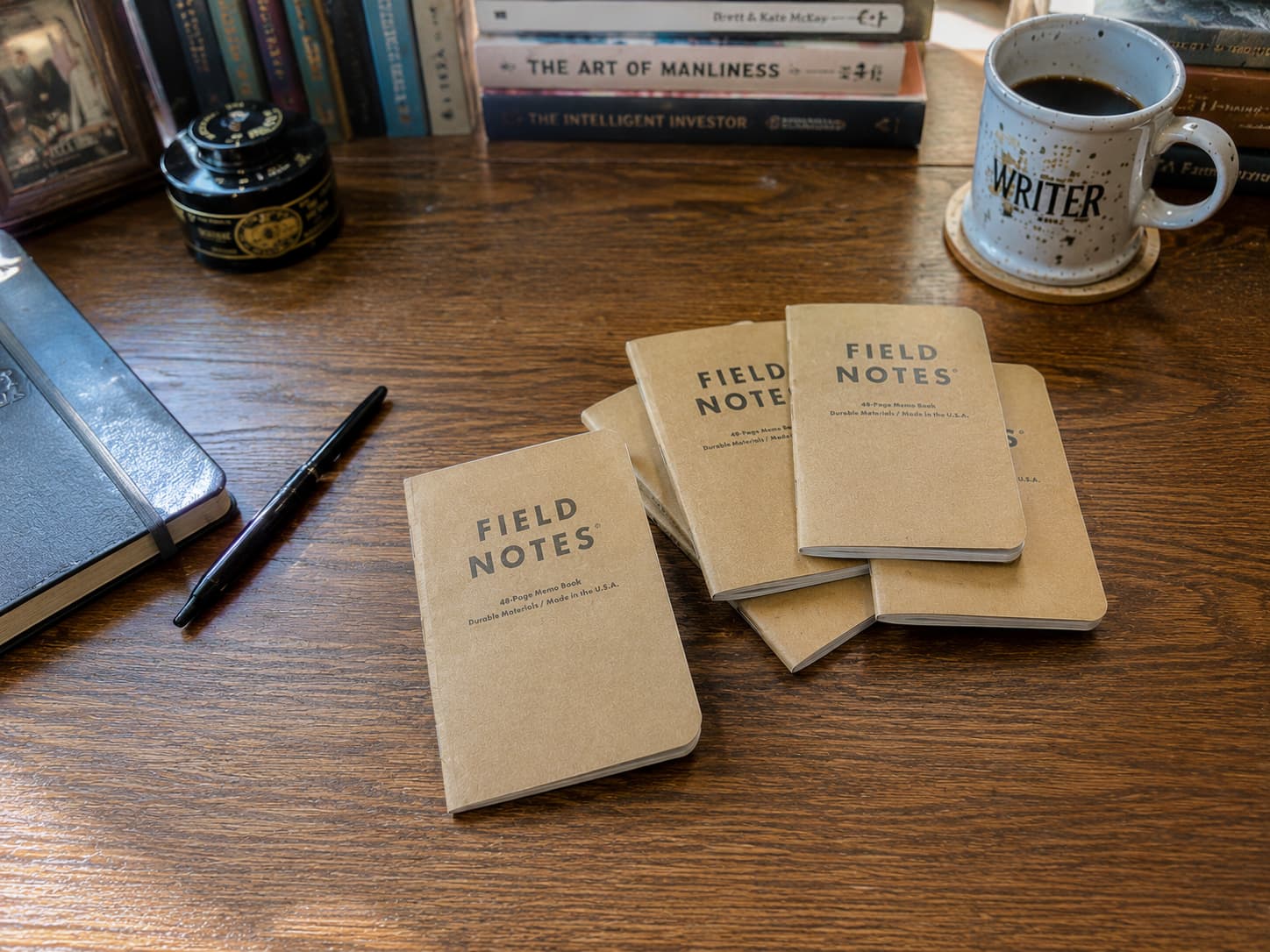
The physical size of the notebook affects where and how you use it. A pocket-sized Field Notes notebook is great for jotting ideas on the go, but it is not comfortable for long writing sessions. The pages are small, and the thin cover bends after a few weeks in a back pocket. For daily writing, I prefer something larger. An A5 notebook - about the size of a paperback book - is my sweet spot. It fits in most bags, opens flat on a desk, and gives enough room per page that I do not feel cramped.
Binding matters more than most people realize. A notebook that does not lie flat when open is frustrating to write in. You have to hold it open with one hand, which tires your wrist and slows you down. Leuchtturm1917 notebooks have a sewn binding that opens flat from the first page. Midori MD Notebook uses a similar binding, and both brands lay flat without any effort. I have tested notebooks from Baron Fig that also open flat, though their paper is slightly less fountain-pen-friendly than Leuchtturm or Midori.
Cover choice is a personal thing, but I have found that Soft Cover notebooks are easier to carry and more comfortable to hold during long writing sessions. A Hard Cover offers more protection in a bag, but it adds weight and does not bend at all. If you write at a desk every day, hard cover is fine. If you carry the notebook with you and write in cafes or on trains, soft cover is more practical.
Page Layout and Your Writing Style
The internal layout of the pages changes how you use the notebook. Lined paper is the standard choice for most daily writers. It keeps your writing straight and gives a clean look. But I have moved away from lined paper over the years. I find that grid paper gives more flexibility. You can write in straight lines, draw diagrams, sketch layouts, or make tables. The grid is subtle enough that it does not distract from prose, but it is there when you need structure.
Some people swear by blank pages. They say lines constrain creativity. I have tried blank pages and found that my writing drifts uphill on the left side of the page and downhill on the right. Without lines, I spend mental energy keeping the text straight that I could spend on what I am actually writing. Grid paper solves that problem without the rigidity of ruled lines.
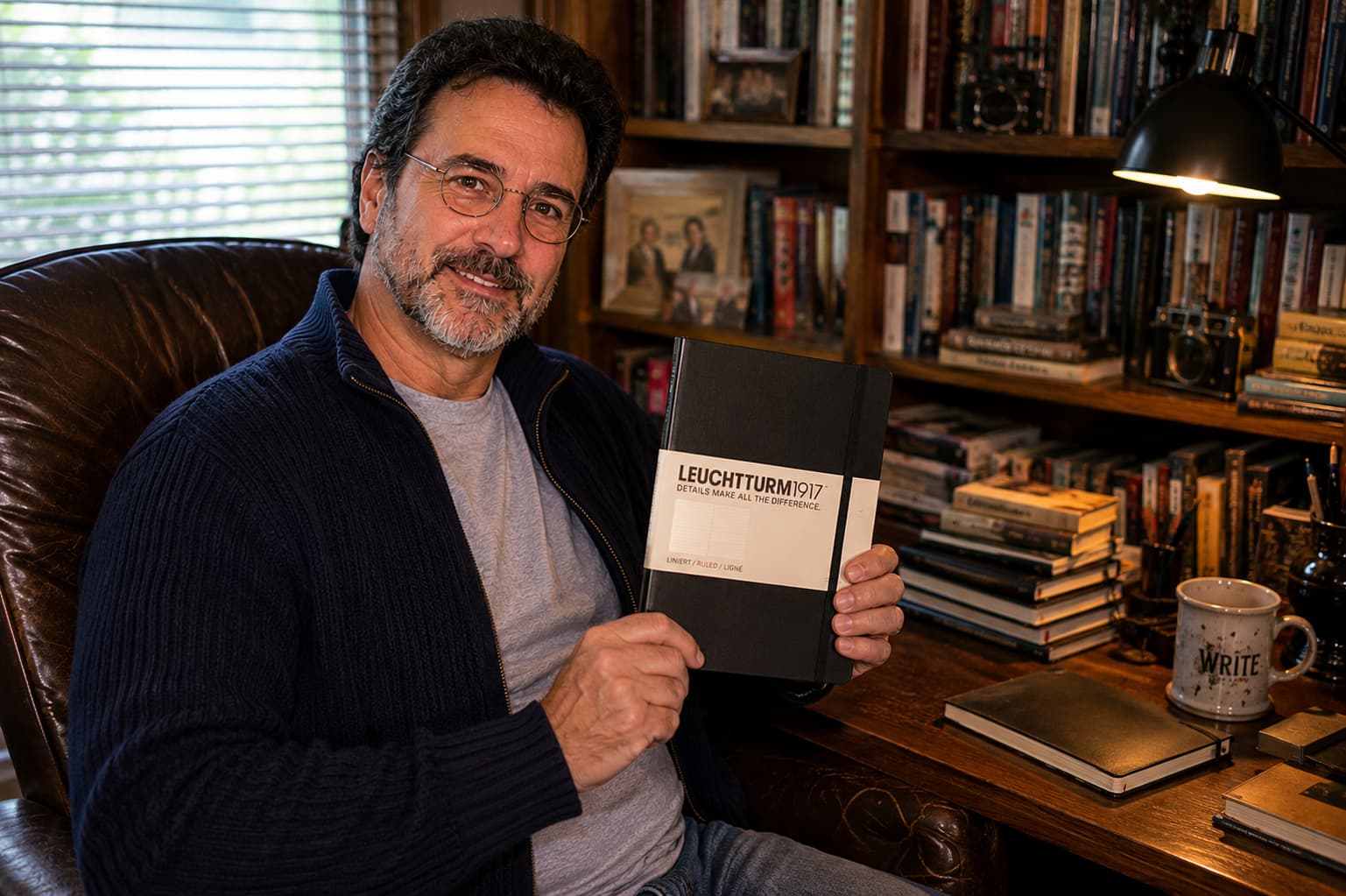
The bullet journal method has become popular over the last decade, and it works best with either grid or dot grid paper. The method involves rapid logging, collections, and indexing, and a grid helps keep everything aligned. I have used a bullet journal for task management and daily logging, and I prefer the Leuchtturm1917 for that purpose because the pages are numbered and it already has an index page. It saves setup time.
Building a Daily Habit
No notebook will make you write if you do not want to. But the right journal for daily writing can make the difference between a habit that sticks and one that fades after a week. When the notebook feels good in your hands, when the paper is a pleasure to write on, when the binding lies flat and the cover fits your style - you look forward to opening it. That anticipation matters.
I have seen people buy an expensive notebook and then feel too intimidated to write in it. They want the first entry to be perfect, so they wait. They wait for the right moment, and the notebook sits empty. Do not let that happen. The first page of any journal is the hardest. Write something bad on purpose. Write a grocery list. Write a complaint about the weather. Get the ink on the page. The notebook is a tool, not a museum piece.
If you are just starting a daily writing practice, I recommend morning pages as a way to build the habit. Three pages of stream-of-consciousness writing every morning, before you check your phone or talk to anyone. The content does not matter. The act of filling pages is what matters. A cheap notebook works for morning pages because you will fill them quickly. But I have found that a notebook with good paper and a comfortable size makes the process less of a slog. I use a Midori MD Notebook for morning pages right now because the paper is soft and the binding is flexible. It feels like a book, not a pad.
Writing Prompts and Starting Points
Sometimes the hardest part of a journal for daily writing is knowing what to write. I keep a list of writing prompts in the back of my notebook for days when my mind is blank. Simple questions work best: What did I learn today? What surprised me? What am I worried about? What made me laugh? The prompts are not there to produce great writing. They are there to get the pen moving.
I have also used The Artist's Way by Julia Cameron as a companion to my daily writing. The book prescribes morning pages and weekly artist dates, and it has helped many people get past the internal critic who says nothing is worth writing. The journal is the place where that critic is not allowed. You write badly, you write boringly, you write the same thing three days in a row. It does not matter. The value of a daily writing practice is cumulative. It shows up over months and years, not days.
Final Thoughts on Choosing Your Journal
If I had to recommend one notebook to someone starting a daily writing habit, it would be the Leuchtturm1917 in A5 size with grid paper. It is a reliable all-rounder. The paper handles most pens well, the binding lies flat, the pages are numbered, and it comes in a wide range of cover colors. It is not the cheapest option, but it is not the most expensive either. It sits in a sweet spot of quality and price that makes it a safe choice.
For someone who writes with a fountain pen and wants the best paper experience, the Hobonichi Techo with Tomoe River Paper is hard to beat. For someone who wants a simple, no-frills notebook that feels like a classic blank book, the Midori MD Notebook is excellent. For someone who writes on the go and needs something sturdy and pocketable, Field Notes covers that need well. And for someone who wants a smooth, coated paper that works with any pen, Rhodia delivers every time.
The best journal for daily writing is the one that makes you want to write. Do not overthink the choice. Pick one, start writing, and if it does not work, try another. The habit is what matters, not the notebook. But a good notebook makes the habit easier to keep.